Sandstone Way: Hostels and Bunkhouses

The Sandstone Way

The Sandstone Way, opened in 2015, is a 120 mile mountain biking route running the length of Northumberland between Hexham in the south and Berwick upon Tweed in the north. The route takes riders across an ever-changing landscape, rich in history, geology, and iconic scenery. In the north it runs along a sandstone ridge linking numerous sandstone crags and outcrops, hence the name, The Sandstone Way.

Sandstone Way. Hostel & Bunkhouse Accommodation

Both Hexham and Berwick upon Tweed have railway stations. Between these two towns, the route passes through numerous villages and small communities including Wooler, Rothbury and Bellingham. It has been designed with safe river, main road, and railway crossings.

A Mountain Bike Route

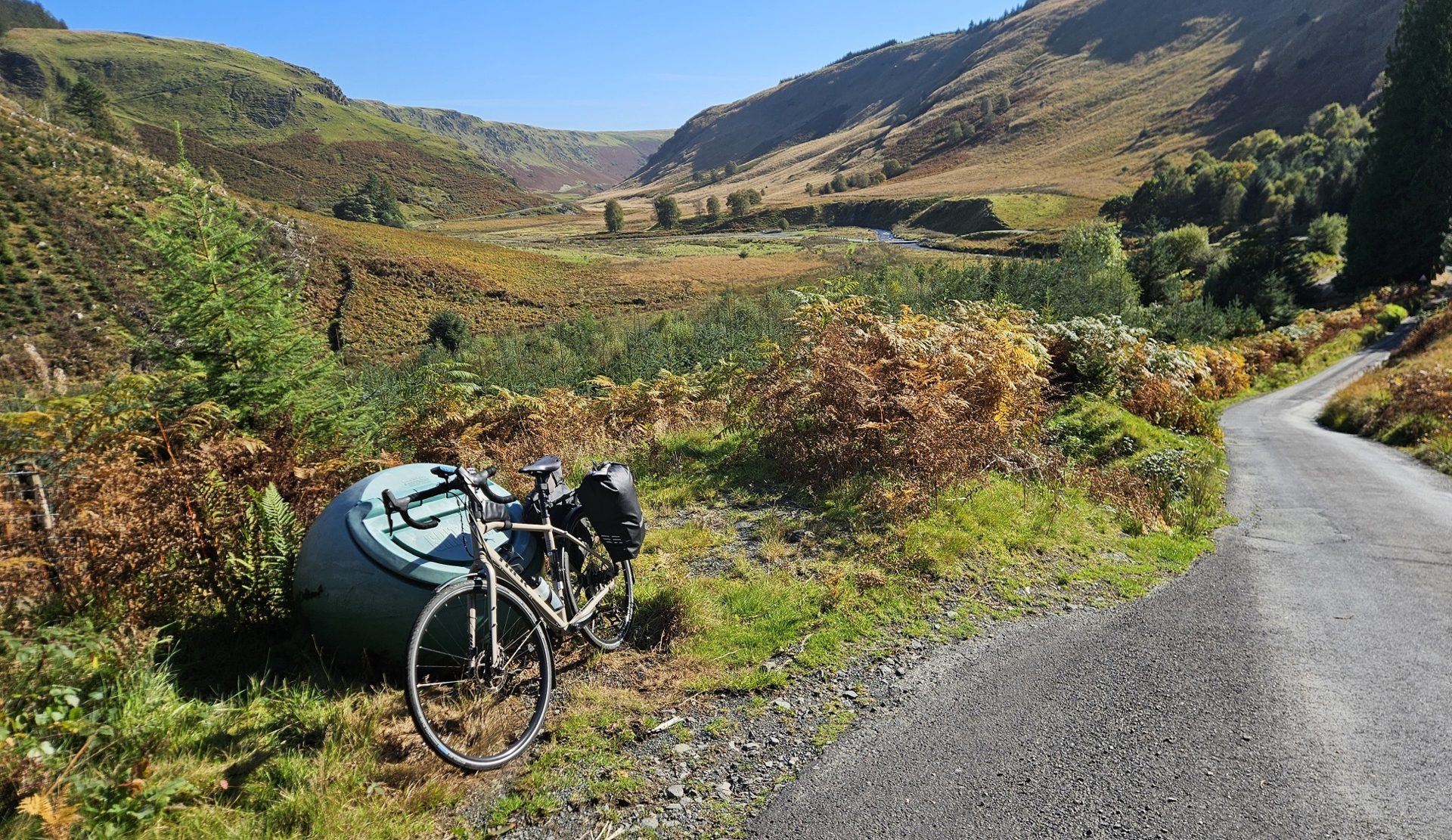
The Sandstone Way was designed by Ted Liddle specifically for mountain bikers and as much of the route as possible is off-road. It will appeal to riders of all abilities and most will take 3 or 4 days to complete. The ‘fit and the fast’ could possibly ride the route in 2 days but in all probability, most would wish they had taken 3 days. The route is clearly waymarked with a distinctive green logo roundel.

Sandstone Way, accommodation at Wooler Youth Hostel
Wooler Youth Hostel, also on the route, where providing accommodation to cyclists is part of the culture.

On and near to the route are many independent hostels and bunkhouses offering great value accommodation. Those on or just off the route are perfect for your overnight stopovers. Whereas those nearer to the coast or to tourist towns such as Alnwick, of Hatty Potter fame, are great if some of the family are riding the route and the others want to visit local attractions or spend a day on the beach.

More information about this exciting route can be found on the Long Distance Walkers website and the Sandstone Way website.  Maps can be purchased from Northern Heritage Services


Yorkshire Three Peaks : Accommodation near Pen-y-ghent, Whernside and Ingleborough

The Three Peaks of Pen-y-ghent, Whernside, and Ingleborough in Yorkshire have been made famous by the Yorkshire Three Peaks Challenge, a Marathon in the Mountains.  Victoria Wilkinson, winner of the ladies’ race for the past 5  years recommends that anyone training for the Challenge should include a weekend recce of the route. She recommends a stay in one of the bunkbarns with a group of friends. It’s a great way to get to the peaks. Spending time with friends is always a good excuse.

Group trip to the three peaks

Of course, you do not need to bring a group of friends for your trip, as many of the bunkhouses in the area provide accommodation for individuals, whether in a great value dorm or a more luxury private room.  Whichever you choose the self-catering facilities available in the bunkhouses will make your stay a good value. Your bunkhouse or hostel will often also provide a place to leave your car, with many bunkhouses being right on the route.

The area around the three peaks is wild and there are miles of empty paths to explore. With the wide choice of luxury and great value bunkhouses available, why not take the time to explore more of the area?  With hostels strategically placed along the route you can walk the Three Peak Challenge in a gentle two days and take in all the scenery has to offer.  Or even better leave the route entirely and explore this classic wilderness area without the crowds to distract you.

This Marathon in the Mountains is a blue-riband event of the fell running calendar. The race takes on the three highest mountains in Yorkshire – Pen-y-Ghent, Whernside, and Ingleborough over 23.3miles and over 1600m of ascent, quite a daunting prospect! Details of the Trail can be found on the Long Distance Walkers website.

D of E Accommodation : Bunkhouses and Camping Barns

“Accommodation must be by camping or other simple self-catering accommodation (e.g. camping barns or bunkhouse)”

Did you know, The Duke of Edinburgh Awards now allow participants doing the Bronze, Silver, or Gold Awards to stay in camping barns or bunkhouses? Number 6 on “The 20 Conditions of Expeditions” states “Accommodation must be by camping or other simple self-catering accommodation (e.g. camping barns or bunkhouses)”

This is where Independent Hostels come in! We have hundreds of camping barns and bunkhouses all over the UK that fit this DofE condition perfectly. Camping barns and bunkhouses at incredible prices that won’t break the bank.

Puttenham Camping Barn on the North Downs Way passed by many DofE walkers every summer
Puttenham Eco Camping Barn on the North Downs Way passed by many D of E walkers every summer

Why choose an Independent Hostel camping barn or bunkhouse for DofE accommodation?

Independent Hostels camping barns and bunkhouses are ideally suited for DofE groups because:

  • Camping barns and bunkhouses are situated in the typical areas that DofE expeditions take place such as AONB.
  • They are often close to footpaths and quiet roads as these buildings have been used by walkers, cyclists, and mountain bikers for decades.
  • Our camping barns and bunkhouses are generally small and compact, some only sleeping 4-6 people. DofE groups could book the whole place for themselves or a dormitory within a larger camping barn.

Fisher Gill Camping Barn ideal for DofE expeditions in the Lake District

Why stay in simple self-catering accommodation rather than camp?

Staying in a camping barn or bunkhouse rather than a tent makes so much sense.

  • It allows DofE expeditions to take place outside of the summer months as they are less susceptible to the elements and have heating such as a log burner.
  • There is nothing worse than camping in the pouring rain as the water slowly seeps through your tent and onto your belongings, then packing up soaking wet equipment and trudging on in wet boots the next day. Thankfully, camping barns are much more water-tight than tents meaning the DofE group can have a comfortable night’s sleep and the participants will be in much better spirits to face the day’s challenges.
  • Camping barns and bunkhouses are safer options as the doors are lockable. Meaning the DofE group can sleep soundly at night.
  • There are bathrooms and showers located inside the accommodation which means there is no need to run across a field in the middle of the night in search of a toilet.

    Sleeping platforms at Carrshield Camping Barn in Northumberland, ideal for DofE groups
    Sleeping platforms at Carrshield Camping Barn in Northumberland are perfect for DofE accommodation.

Should your DofE group choose a camping barn or bunkhouse?

DofE accommodation: Camping barn

  • Camping barns are generally more basic than bunkhouses.
  • Some are little more than a stone tent with sleeping platforms and a cooking area.
  • The D of E participants would need to bring mats, sleeping bags, cooking equipment, food etc.
  • Many don’t have electricity or heating other than a fire or log burner.

If you are wanting your DofE group to have an overnight experience as close to camping as possible, then stay in a camping barn (sometimes also called a bothy).

DofE expedition location
Alstonefield Camping Barn in Derbyshire

DofE accommodation: Bunkhouse

  • Bunkhouses come in all shapes and sizes and generally offer a better standard of accommodation than camping barns.
  • There will be bunk beds in dormitories, a self-catering kitchen with crockery and cooking equipment, hot water, and showers.
  • The DofE expedition group will still need to bring their own bedding though.

If your participants are looking for something with a few more creature comforts and the facilities to make a hearty dinner or breakfast, a bunkhouse would be more suitable.

Bunks at Hagg Farm in the Peak District ensure a dry night's sleep for DofE participants
Bunks at Hagg Farm Outdoor Centre in the Peak District ensure a dry night’s sleep for DofE participants.

Camping barn and campsite on the same site for DofE groups.

You might also be interested in hostels and bunkhouses with campsites on the same site. These hostels with campsites are very popular with D of E groups, traditionally the leaders stay in the hostel while the participants camped.  However, with the rule change, DofE participants can choose wherever they like.

Don’t let the British weather ruin your next D of E expedition. Book into an independent camping barn or bunkhouse to guarantee a dry night’s sleep. The participants will be in much better spirits to face the challenges of the next day.

campers enjoying an evening at Pindale Farm in the Peak District
DofE campers enjoying an evening at Pindale Farm in the Peak District

Settle to Carlisle : Bunkhouses and Hostels

Settle to Carlisle country is also a paradise for walkers with numerous walks from the various stations along the route. What fun to combine journeys on this stunning railway with a walking holiday or mini-break.  There is also the annual Settle to Carlisle Ride2Stride Walking and Music Festival. Taking place each Spring, it is a week-long festival of walks, talks and music along the Settle to Carlisle line.  Growing in popularity with visitors from the far corners of the world, it was listed in the top 10 walking festivals by The Telegraph in 2017.

There are independent hostels and bunkhouses all along the route of the Settle to Carlisle line.  The map shows you where they all are.  Providing flexible and great value self-catering accommodation with no minimum length of stay, Independent Hostels have long been firm favourites with so many outdoor enthusiasts. From small and simple camping barns to large and very well-appointed hostels there is something for everybody and every budget.

Accommodation Retreats : Take time out at a well-being hostel

Lots of hostels have ideal locations for organised retreats; quiet, remote, and in stunning scenery.  A few very special places provide accommodation with an atmosphere where sole travelers can take time out to focus among new people or simply enjoy being alone. Self catering facilities and communal meals at these places provide opportunities to focus on new relationships.  Often these hostels will be close to religious sites or pilgrimage routes. Many are run on ethical grounds by religious organisations.

Retreats in Scotland

Achaban House on the pilgrims route to iona
Achaban House home of Ross of Mull Rooms on the pilgrim’s route to Iona

At the end of the pilgrim route on Mull, just a short ferry ride away from the Isle of Iona. Ross of Mull Rooms at Achaban House provides comfortable accommodation with a tranquil atmosphere.  They are set in a natural environment surrounded by wildlife. And just a few minutes walk from Fionnphort, where the ferry leaves for Iona.   A much-loved place by guests looking for peace, simple companionship, and an easy daily pilgrimage to the monastic isle.

Abbey walls on the isle of iona
Abbey walls on the Isle of Iona

Iona Abbey was started by St Columba in the 6th century and is now home to the Iona Community.  A contemporary take on pilgrimage is ‘transformational journeying’ and Iona has been a desired destination for pilgrims for many years.  Iona is described as a ‘thin place’ between the physical and spiritual and travellers come from around the world to experience its unique quality and astonishing beauty. Transformation needn’t be big and momentous but can be gentle and warm, like sitting outside the Inn at Fionnphor, looking out to Iona and watching the sun sink quietly over the Western Isles.

knoydart remote and ideal for retreats
Knoydart Bunkhouse is on a remote peninsula on the west coast of Scotland “just to be there is good for the soul”

Knoydart Bunkhouse is on a remote peninsula on the west coast of Scotland. It is accessible only by boat or a long hike which gives an otherworldly feeling.   People who reach Knoydart, jutting out on the Atlantic coast say “just to be there is good for the soul”. Surrounded by sea and rugged, mountainous terrain and a National Scenic Area of mountains, glens, and coast, Knoydart is a haven for wildlife. Bring walking boots and binoculars and you’re set for a retreat to remember!

Badrallach Bothy and the Earth Mind Fellowship
Badrallach Bothy and the EarthMind Fellowship

Badralloch Bothy is home to the EarthMind Fellowship, which runs nature-oriented workshops for health and wellness.  This social enterprise organises workshops for exploring nature. They incorporate herbal medicine and nutrition, health and wellness, stress-management, HeartMath, Wilderness Therapy, and creative approaches such as dance, music, art, and writing.

Retreats in England

Hebden Bridge is a mill town reclaimed by artists, writers, and green & New Age practitioners of alternative therapies.  Hebden Bridge Hostel reflects its host town and is often used by yoga and zen groups for retreats and workshops.

Monkton Wyld court for peace and retreats
Monkton Wyld Court for peace and retreats

Monkton Wyld Court in Dorset has a history of well-being education. It is run by an eco-community that promotes self-sufficiency in an idyllic setting.

Ninebanks hostel in the North Pennines host retreats organised by Buddhists, artists, and well-being coaches. Organisers find the friendly feel of the building, the social atmosphere of the living space, the peaceful rural location, and the wonderful view all combine to engender a feeling of fulfillment.


Skiddaw House mind over mountains
Skiddaw House hosts Mind over Mountains

Skiddaw House, one of the UK’s remotest hostels, has hosted laid-back weekends of walking and talking with like-minded adventurers.  Called ‘Mind Over Mountains’  these weekends promote the benefits of UK mountains for mental and physical health.  By climbing mountains, and sleeping on the side of one at Skiddaw House you can escape from modern life and make time for your mental and physical well-being.

Yealand Hostel and Airton Barn have peaceful locations and a Quaker connection. Yealand is close to three very small villages with little through traffic and good transport links.

 Retreats in Wales

corris hostel ideal for retreats
Corris Hostel is ideal for retreats

Corris hostel is a renowned haven from the stresses of the outside world; with its homely atmosphere, friendly staff, inspirational library, and cosy wood fires. The hostel has a holistic focus and an interest in the ‘healing arts’. The garden is terraced up the hillside with a range of ‘nature-scaped’ themes and places of meditation and solitude beyond the boundary. There is a deciduous tree forest continuing up the mountain and is accessible. This retreat has a great ’spirit of place‘ and connection to nature.

Whether you join an organised retreat or visit an awe-inspiring place on your own, a retreat gives you the chance to take a break from your everyday.

Hammocking & Hostelling

The best thing to me about hammocking is that it can be done almost anywhere. From nestled cosily in woodland to the somewhat fear-inspiring suspension over moving water to the extremes of hanging hundreds of metres over a ravine, anything goes. Hammocks are stackable too so you can bunk up just as you would in a hostel dorm! Whatever floats your boat – or should we say, hangs your hammock – the more imaginative the better. My favourite spots are several self-discovered places along the River Derwent, what better place to take five and chill out in the cool riverbank shade?

Hostels are fast catching on to the opportunity to provide their hammock-spaced wooded grounds for overnight stays. With the right equipment, spending the night in a hammock is easy, and surprisingly comfortable. It may even send you to sleep with the gentle rocking sensations.

And if you like being close to nature you can’t get much closer than in a hammock! Under the stars taking in the fresh air is a delight (providing it doesn’t rain of course…) but with just a little prep and a trusty tarp, hammocking can be enjoyed throughout the year. Nothing resets your circadian rhythm better than an evening outdoors.


Hammocking solo or with friends

A hammock trip can be enjoyed with friends or as a solo swinger, the choice is yours. I like to hammock at hostels as you get all the benefits of a hostel while still being able to get up in a tree! Breakfast after waking to the sunrise and then a stroll through the woods into town? Yes please. I’ve met a few fellow hammockers at hostels in my travels and they’ve been friendly and even shared some tips.

My biggest tip for hammockers is to take your time picking the best spot, once you’ve set up there’s all the time in the world to relax. But make sure you’re nice and comfy first and foremost. I hope that I’ve convinced you to give it a go, good luck and happy hammocking!

The Scottish National Trail: Hostel and Bunkhouse accommodation

The Scottish National Trail weaves its way through Scotland. The trail covers 537 miles (864 km) of the most varied and spectacular landscapes in the world. The Scottish National Trail was devised by Cameron McNeish and launched in 2012. Starting in Kirk Yetholm the trail connects with the Pennine Way creating an even more massive challenge for those attempting both routes!

McNeish’s vision has created a trail that encompasses many of Scotland’s defining features, it goes through the centre of Edinburgh, the country’s capital, runs alongside famous rivers such as the Tweed to Peebles, takes in the Union Canal to the incredible Falkirk Wheel and the Forth & Clyde canal just north of Glasgow as well as a short section of the Caledonian Canal north of Invergarry.  The route makes sure you visit both of Scotland’s National Parks: Loch Lomond and the Trossachs and the Cairngorms.

Crossover with other long-distance trails

In parts, The Scottish National Trail follows a number of existing long distance routes starting with the St Cuthberts Way and including; The West Highland Way to Drymen, The Rob Roy Way to Callander, a short section of the Great Glen Way, and the Cape Wrath trail.  As a result, some sections are well waymarked. It is recommended that hikers obtain the guides to the route to ensure they are going the correct way. Further route details are available here and on the LDWA website.

The level of difficulty of the route does vary from the gentle lowlands and canal towpath sections in the south to mountain walking (mostly) in the north. The sections through the Cairngorms and the Cape Wrath trail require the hiker to carry all provisions including accommodation but much of the rest of the route can be walked using independent hostel accommodation coupled with SYHA or B&Bs. It is estimated that it would take approximately 5 weeks to walk the whole length of the route. Many have done it in sections over a number of years.

Land’s End Trail and Mary Michael Pilgrim’s Way: Accommodation.

The Land’s End Trail (Red) and Mary Michael Pilgrim’s (Orange) both begin at Land’s End and finish at Avebury but take in different parts of the area. The Mary Micheal Pilgrim’s way specialising in connecting significant Christian and Pre-Christian sites.

The Land’s End Trail is a great alternative for walking in the west country to the South West Coast Path.  There is a lot of information on the route on the land’s End Trail section of the Oliver’s Cornwall Website and on the Long Distance Walkers website.

The Mary Michael Pilgrim’s Way is a vision created by the Mary Micheal Pilgrim’s Way non-profit organisation. The idea is to create a pilgrimage that connects significant Christian and Pre-Christian sites across the south of England from Land’s End in Cornwall to Norfolk.  So far the section from Land’s End to Avebury has been documented in two guidebooks available from the organisation’s website and is also covered on the  British Pilgrimage Trust

Cyclist Accommodation with Secure Bike Storage :

Cyclist-Friendly Hostels & Bunkhouses in the UK

If you’re planning a cycling break in the UK, there’s nothing better than finding accommodation that truly understands what riders need. Our collection of cyclist-friendly hostels and bunkhouses offers the perfect blend of comfort, practicality, and location—so you can focus on the ride and enjoy every mile.

Set in some of the UK’s most beautiful rural areas, these hostels and bunkhouses give you direct access to quiet country lanes, traffic-free trails, and breathtaking landscapes. From rolling hills and open moorland to dramatic coastlines and peaceful valleys, you’ll find routes to suit every pace and style. Along the way, discover welcoming villages, friendly cafés, and local pubs where you can refuel and soak up the atmosphere.

After a day in the saddle, you’ll appreciate facilities designed with cyclists in mind. Many of these properties offer secure bike sheds or dedicated storage areas, so you can rest easy knowing your bike is safe. Wash-down facilities are often available too—perfect for cleaning off the day’s mud—along with maintenance spaces and e-bike charging points to keep everything running smoothly.

Inside, you’ll find everything you need to unwind. Expect warm beds, hot showers, and a relaxed, friendly welcome. Many hostels and bunkhouses also have well-equipped self-catering kitchens, ideal for cooking up a hearty meal after a long ride. Shared spaces make it easy to meet like-minded travellers, swap route tips, and chat about your latest cycling adventures.

Whether you’re on a solo journey, a weekend escape with friends, or a longer touring holiday, these cyclist-friendly stays offer great value and a laid-back base in some of the UK’s best riding locations. Ride out, explore, refuel, and return to comfort—ready to do it all again tomorrow.

Secure Bike Sheds for peace of mind

All the hostels and bunkhouses on this page have facilities to store bikes safely.

The Limestone Way : Hostels, bunkhouses and camping barns.

With her walking shoes in her hands and her toes relishing the cool softness of the grass, my daughter walked the last few yards to the doors of the Bunkhouse.  After dinner she sighed, “can I go to bed now?” and drifted off.

It had been lovely to walk the first day of The Limestone Way with her. A lively and inquisitive companion, but the miles had exhausted her. From Rocester in Staffordshire, the path follows easy miles first along the River Dove and then, climbing out of Ellaston. Snacking on the wild blackberries thick on the bushes, our breath was taken as we crested the ridge with stunning views on both sides. We nestled in the buttress roots of an ancient tree and ate our lunch in peaceful seclusion. It was only when we greeted an energetic walker coming the other way that we realised that we hadn’t seen a soul since pretty much the start. An impatience to move on picked us up.

Dropping down towards, and then crossing the A52 we passed into Derbyshire. We paused and quietly enjoyed the company of a small owl who seemed in no hurry to leave its perch right beside the track. Then we left the Limestone Way at the intriguing Coldwell Bridge, which seemed too grand and ornate to be merely the farm track bridge it is today. We wondered about its history.

It’s a short detour to Ilam from there, but that’s where our accommodation was. With my daughter safely in bed, I enjoyed the handover from swifts to bats as I sat and breathed in the wonderful, wonderful evening view.

Day 2 finds me walking alone. I picked the path up again at Thorpe and walked overland through the imposing old gates to Tissington Hall, and along The Avenue, a mature tree-lined lane. Tissington village was lovely. Limestone cottages and slightly self-conscious attention to period detail. The Limestone Way crosses the cycle and footpath of The Tissington trail and drops steeply down and back up above Bletch Brook. As a drizzle fell, I gladly sheltered on a wizened stile and caught my breath.

I had chosen the Limestone Way as I’d crossed, and indeed followed, parts of it many times as I explored the hills around my home town of Matlock. I was in the process of rebuilding my strength and fitness after a bout of illness. The reasonable mile count and the relatively gentle hills of The Limestone Way seemed like the ideal next challenge.

Although some of the next stretch was road walking up a long slow hill, I was rewarded with a lunch break perched on a high limestone pavement. Away to the south I could see Carsington Water and the smooth grace of its wind farm. I counted five buzzards patrolling their various territories.

The descent from above Grangemill isn’t great, with the industrialised lanes and noise of the quarries, but at least it reflects the true nature of limestone country. I was grateful by now not to have to traverse the steep gorge of The Via Gellia. Instead, the path takes a gentle climb up through the farms of Ible and then to Bonsall in its warm and peaceful valley.

On Day three I am in very familiar territory, crossing the moors above Bonsall. The rutted ground and pits of the old mine workings were thick with gorgeous wildflowers. My wife would know their names. Again, I considered the simple joy of a clear head and the steady pace of solitude had to be balanced against the lost opportunities to share sights like this.

Suddenly, the path emerged on the shoulder of the valley and skirts the pretty villages of Winster and Elton. It dove down a wooded lane before leading up once again towards the twin towers of Robin Hood’s Stride. A glorious tor of rock. when I have been here before, I’ve been with family, climbing and laughing and exploring its wrinkles. This time I am alone. Resting against the sun warmed rocks, a nap overtook me.

Some miles later, having skirted the woods of Harthill, I enter the edge of Youlgreave. It is a beautiful village with good pubs and small shops keeping the community vibrant. Here the River Bradford is dammed into a series of fish pools for The estate of Haddon Hall. I take off my boots and wade upstream for about a half mile. Too soon I have to climb out of the shaded valley and up onto the moor again. I held out hope that the signposted picnic area hard at the top of the climb might hold an itinerant ice cream van, but sadly not.

The path snips the end off Lathkill Dale, giving me only a brief taste of its stark, arid beauty, before leading me to Monyash.

The early part of day 4 takes me along roads and lanes, and although they are quiet, it is not as easy on the feet as a grassed footpath. Despite a quick dive down into Miller’s Dale, the momentum is definitely uphill. Over the past four days, with all its climbs and drops, the trend has been to rise. Over day 4 this trend becomes very clear indeed. The thin soil and limestone outcrops are more pronounced here and despite the clear skies, the air is cooler. As I cross the moors above Peak Forest, I am, for the first time since I began, cold.

The final destination, the northern end of The Limestone Way, is at Castleton. You begin the descent slowly enough, but soon you are scrambling over an uneven descent of broken dry stream bed rocks. Down the crack of a gorge that slowly widens to show that you are above the precipitous cliffs of Peveril Castle. Down, down. Quickly, over just a mile or so, all the hard-won miles and feet of altitude drop away. I passed day walkers and picnickers, carrying plastic bags of goodies, who have climbed up from the town. I found myself resenting their presence a bit. Soon I was under the shadow of the castle and then before I knew it I was at the foot of the long drop down, my legs readjusting to level ground. Castleton. I had completed the Limestone Way. Suprisngly that there were people, cars, and bustle.

I stood alone under my rucksack, alone among these people who hadn’t shared the distance and the effort with me. I felt stronger and welled than I had for a long time.

Full details of the route can be found on the LDWA website.

Horse B&B and Riding Holidays: Self catering accommodation

Hostels  for horse riding holidays

A number of independent hostels are geared up for  horse riding holidays.  Whether you want to take your own horse on holiday with you (horse B & B) and ride out from the hostel or you want to book onto organised treks or have riding lessons on the centres own horses,  one of the hostels above will be able to help.

Enjoying the view! Riders savouring their riding holiday at Rooking House Camping Barn, near Ullswater
Enjoying the view! Riders savouring their horse riding holiday in the Lake District


Take your horse on holiday: Horse B & B

Is the perfect holiday for you one where you take your horse on holiday with you?  Where you and your horse travel to a different part of the country to explore the local bridleways, off road tracks,  country lanes, open moorland and village pubs?  Where you have great value self catering accommodation with horse B & B on site?  Perhaps you have a group of horsey friends who would love to join you on your horse riding holiday.

If that’s the case and you fancy going to Wales, take a look at Mid Wales Bunkhouse, Conwy Valley Backpackers Barn, Clyngwyn Bunkhouse (Brecon Beacons) or Springhill Farm Bunkhouse ( north Welsh Borders).

horse B&B at mid wales bunkhouse
Horse B&B at Mid Wales Bunkhouse

Mid Wales Bunkhouse has grazing and stabling for your horse or pony during  your stay in the bunkhouse.  The bunkhouse has a self catering kitchen and meals can be provided on request.   Explore the wild and dramatic Mid Wales countryside with routes available from the gates, from an hour’s hack to whole day circular picnic rides.   Your hosts at Mid Wales Bunkhouse can offer expertise and local knowledge to help plan rides.   On request they may also accompany you on their own pure bred fell ponies so that you get to see the very best that the area has to offer.  Parking is available for trailers and small horse boxes.

Exciting Countryside around Mid Wale Bunkhouse Horse B&B
Exciting Countryside around Mid Wales Bunkhouse Horse B&B

If its Hadrians Wall you would like to explore on your horse then contact Slack House Farm for more details.

A riding holiday group at Springhill Farm Bunkhouse. Use their horses or book horse B & B for your own horse

A horse holiday without your own horse: Stay at a hostel with its own equestrain centre.

If you want a riding holiday but don’t have your own horse, or don’t want to bring your own horse on holiday but still want to ride, then staying at a hostel on an equestrian centre will be the perfect solution. You can use the equestrian centre’s own horses and book onto their organised activities; trail rides, treks or lessons. The perfect solution for a great horse holiday without your own horse.

Springhill Farm on the north Welsh Borders is a BHS  (British Horse Society) approved equestrian centre offering trekking across some of the country’s most fantastic riding areas.  Or if you prefer you can have  flat or jumping lessons as well as, or instead of the trail rides.  Alternatively, on a small hill farm in  Brecon Beacons National Park, there is Tregoyd Mountain Riders. Also BHS approved, Tregoyd Mountain Riders offers trekking, trail riding and riding lessons.  The on site bunkhouse, Cadarn Bunkhouse, offers great value accommodation for your group of riders.

A snack and a rest after the morning's horse holiday adventures.
A snack and a rest after the morning’s horse holiday adventures from Springhill Farm.

All the accommodation at these equestrian centres is self catering, offers great value for money, has no minimum length of stay and is great for groups.

Photos taken of horse riding holidays from:  Springhill Farm, Mid Wales Bunkhouse 

Dark Sky Areas: Accommodation in Hostels and Bunkhouses

Our wonderful island is home to a surprising number of dark sky areas. Light pollution is kept under control and where, when conditions are right, visitors can feast their eyes on the wonders of a star-filled night. Unsurprisingly these are sparsely populated areas, often rugged and remote. Fortunately, they are well served with independent hostels, camping barns, and bunkhouses offering great value self-catering accommodation.

A Dark Sky Park at night

Perhaps the most well-known of our Parks is Northumberland International Dark Sky Park. This was awarded its status by the International Dark Sky Association in December 2013. At 572 square miles (1,483 square kilometres) it is also Europe’s largest area of protected night sky. Due to its pristine skies, it was awarded gold tier status. Which made it officially the best place in England for people to go to enjoy the night skies. Here visitors will be able to see up to 2,000 stars, the Andromeda Galaxy, and the Milky Way. If you strike lucky you might also witness a meteor shower or the Northern Lights (aurora borealis). Look at the map and you will see you have the choice of many independent hostels, situated in the park.

Northumberland Dark Sky Park
A star-filled night in Northumberland Dark Sky Park

The UK’s first ever international Dark Sky Park was Galloway Forest Park in southwest Scotland. It was designated by the International Dark Sky Association in November 2009 as only the fourth Park in the world and the first in the UK. Just like Northumberland, it enjoys gold tier status. Close to Galloway Forest Park the town of Moffat was proud to be named Europe’s very first Dark Sky Town. They adopted special street lighting to keep light pollution to a minimum in order to preserve the wondrous starry skies. There is hostel accommodation on the edge of Galloway Forest Park and in Moffat.

A night Sky over Tryfan near Ogwen Valley Bunkhouse
A magnificent sky over Tryfan near Ogwen Valley Bunkhouse

Wales is also blessed with large areas of low light pollution. The Snowdonia National Park (Eryri) and The Brecon Beacons National Park (Bannau Brycheiniog) are both International Dark Sky Reserves. The Elan Valley Park runs between them. In 2017 the Pembrokeshire Coast National Park had 4 locations designated as Dark Sky Discovery Sites. These areas are literally peppered with hostels, bunkhouses, or camping barn accommodation. There is little excuse for not crossing a star-gazing weekend in Wales off your bucket list!

In Snowdonia (Eyri), Cregennan Lakes is recommended as a great place to stargaze. These sister lakes are found on the flanks of Cader Idris in southern Snowdonia (Eyri). Which is possibly the moodiest mountain in the entire National Park. The easiest approach is from the east, via the minor road from Dolgellau, only a short drive from Plas Isa Hostel. While the aptly named Star Bunkhouse in the village of Bwlch in the Brecon Beacons (Bannau Brycheiniog) is just down the road from Llangorse Lake, identified by the International Dark Skies Association as a prime site for viewing the night sky.

In the south of England, both Exmoor National Park and the South Downs National Park have International Dark Sky Reserve status. While in the north, the North York Moors and the Forest of Bowland AONB in Lancashire both host a number of newly designated Discovery Sites.

Night above Dale House Barn, Gisburn Forest
Star gazers at a bunkhouse in Gisburn Forest (Forest of Bowland ANOB)

In the north of Scotland, the high quality of the night skies above Tomintoul and Glenlivet in the Cairngorms National Park merits the area becoming Scotland’s second International Dark Sky Park. Awarded Gold Tier status, the Tomintoul and Glenlivet – Cairngorms Dark Sky Park is not only the darkest in the UK, but it is also the most northern in the world.

Aurora Borealis on the Isle of Coll, home to Isle of Coll Bunkhouse
Aurora Borealis on the Isle of Coll, home to Coll Bunkhouse

Finally, the Isle of Coll, together with the Isle of Sark have been designated as Dark Sky communities.
In our busy, frenetic, and crowded world it is heartening to realize there are so many areas where sheep outnumber people, where flora and fauna flourish, and where you can raise your eyes skywards after a day’s activity and feast your eyes on infinity and beyond!

Alternative Weddings : unusual and affordable wedding venues

Alternative Wedding Venues with IHUK

We have so many hostels and bunkhouses that make for tremendous alternative wedding venues. The list below is just a few of our favourites.

Get married on a farm – Alternative Weddings

Cholderton Farm, home of Stonehenge Hostel is licensed for marriages. Cholderton Charlie’s rare breeds is licenced to hold ceremonies in different parts of the farm so you can celebrate in a Marquee, a Tipi or Yurt.

Alternative Weddings, get married on a farm
Alternative weddings, get married on a farm

The Youth Hostel onsite provides value accommodation for wedding guests and the farm has some great areas for celebrations including a Wedding barn. Make your dreams come true at Cholderton Farm.

The wedding Barn at Cholderton Farm

Alternative woodland wedding in a Scottish Forest.

Marthrown of Mabie provides alternative weddings near Dumfries in South West Scotland.  You can get married in a forest glade, inside a Roundhouse, or with breathtaking views over the Solway Firth. Bring your wellies or summer sandals for a uniquely special day that everybody will remember for years to come. Marthrown of Mabie provides great value accommodation for 26 guests in their bunkhouse and Tipis, a bridal suite in the Yurt and a campsite for those extra adventurous guests!  The helpful staff have all the contacts you may need to arrange the celebrations including a Scottish piper, humanist and religious celebrants, a local brewery, a ceilidh band and catering for all needs and budgets. (Spit Roasts are always a favourite!).

alternative wedding in a roundhouse at marthrown
Alternative wedding in a roundhouse at Marthrown of Maybe

 Well-being weddings in the foothills of Cadair Idris

Corris Hostel offers a special atmosphere that disengages the stresses of the outside world for your after-wedding celebrations. The award-winning hostel is renowned as a spiritual haven with its caring, easy-going atmosphere and friendly staff. Outdoors the terraced landscaped gardens provide a serene, inspirational environment with a stunning view of the valley below as a backdrop for your photos. There is a large high-ceiling hall for your party and great value accommodation for up to 40 guests. The hostel has laser lighting in the main hall and you can transform this space with your own decorations.

Corrs Hostel alternative Wedding venue

Alternative Weddings in Hebden Bridge

In the same building as Hebden Bridge Hostel is an impressive space ideal for weddings. Hebden Bridge Hostel is housed in the Birchcliffe Centre and adjoins an ex-Baptist chapel that hosts weddings. The Birchcliffe Centre contains the hostel and also The Main Hall, an impressive space and is ideal for weddings. There is a 250+ seat auditorium and a beautiful mezzanine room ideal for celebrations. Each zone can be hired separately or altogether and great value accommodation is available for 33 wedding guests at the hostel.

hebden bridge hostel wedding venue
Hebden Bridge Hostel and Birchcliffe Centre wedding venue next door.


Have your wedding reception inside a former church.  For a quirky alternative to the conventional.


The Chellington Centre in rural Bedfordshire is a former 12th-century church. After a major renovation and extension project, it is now a 30-bed hostel with a huge main hall which lends itself perfectly to a unique wedding reception.

Kingshouse Hotel and Bunkhouse in Glencoe make a stunning wedding venue in the wintertime. Wedding bookings are available from November through to early March.


Cambrian Way : Hostel & bunkhouse accommodation

The Cambrian Way

The Cambrian Way is a walking route over the mountains of Wales. It is 291 miles (485km) in length and was the idea of the late Tony Drake, a long-time member of the Ramblers.  Tony Drake was active in the setting up of the Cotswold Way, the Offa’s Dyke route, and the Youth Hostel Association. In the 1970’s he worked towards the establishment of the long distance path and devised a wild walking route from the South of Wales to the North of Wales taking in the many mountain ranges along the way.

Cambrian Way Summit of Conwy Mountain sychnant Pass
Summit of Conwy Mountain near Sychnant Pass

The Cambrian Way starts at Cardiff Castle and includes most of the best mountain scenery in Wales.  It passes through the Brecon Beacons, the Carmarthen Fans, the Cambrian Mountains, the Rhinogs, the Moelwyns, the Glyders, and the Carneddau. Walking the route you will pass over Cadair Idris, Snowden, and Plynlimon.

Cambrian Way Ffynnon Llugwy Reservoir from Carnedd Llewelyn
Ffynnon Llugwy Reservoir from Carnedd Llewelyn

 Hostels and Bunkhouses on the Route.

Independent Hostels provide ideal accommodation for walkers, with drying rooms and a warm welcome at the end of the day. There are many independent hostels in the areas crossed by the route of the Cambrian Way and the map above shows all of these which are within 5km of the walk.

The Cambrian Way passes right by the door of  Ty’n Cornel Hostel (photo at top of page), a welcoming warm hostel isolated in the wilderness of the Elenydd uplands in the Cambrian Mountains.   This is one of two self catering hostels run by the Elenydd Wilderness Trust. The other hostel is Dolgoch Hostel, which is just over 4km from the Cambrian Way.  Guest are welcome to stop off en route to find peace and quiet at these hostels. The perfect way to appreciate the Welsh Cambrian Mountains’ wilderness and wildlife.  Bring your binoculars to appreciate the birdlife and the sky at night, both hostels are Dark Sky sites.   Look here for full details of  Dolgoch and Ty’n Cornel hostels. Booking is advisable, especially in winter.

Cambrian Way Rhymney Valley Ridgeway near Thornhill
Rhymney Valley Ridgeway near Thornhill

Additional Information

In addition to the independent hostels listed above, the Cambrian Way also passes close to some Youth Hostels including Llanddeusant Youth Hostel, Pen-y-Pass Youth Hostel, Idwall Cottage Youth Hostel and Bryn Gwynant Youth Hostel, and Conway Youth Hostel.  Details of these can be found on the YHA website.

The Cambrian Way society produces a useful online guide to the route, with photographs of the countryside and notification of any changes to the way. Details of the route are also available on the LDWA website.

Stay near a Castle : Accommodation in Hostels and Bunkhouses

Who doesn’t love a castle? Their antiquity seems to have power over us and draws us to them.  The UK is covered with castles in all shapes and sizes and there are a surprising number of independent hostels and bunkhouses within walking distance of a castle. Some, like Totters in Caernarfon, are literally next door nestling in the shadows of the historic castle walls, others like  Castle Rock Hostel in Edinburgh are a mere street away and the majestic view of the castle greets you from the windows and as you leave the front door.

Castle Rock Hostel dwon the road form Edinburgh Castle
Castle Rock Hostel with Edinburgh Castle just down the road

Why visit a Castle

Castles spark the imagination in everyone.  The thick walls and narrow stone stairways instantly transport you to medieval times. The era of knights in shining armour.  Children love nothing better than to explore the ancient rooms, race around the ruins and see the weapons on display.  Overseas visitors are often overwhelmed by the sheer age, number and variety of castles we have in the UK.  Surely one of the best social media posts is one of you in front of an iconic castle. One of the firm favourites is Alnwick Castle in Northumberland which was Hogwarts in the Harry Potter Films and Brancaster Castle in Downton Abbey. With Alnwick Youth Hostel a few minutes walk from the castle, offering family-friendly 4* self-catering accommodation, there is no excuse not to visit.

Alnwick Castle near to Alnwick Youth Hostel
Alnwick Castle, Northumberland with Alnwick Youth Hostel just 8 minutes walk away.

There are so many iconic castles with independent hostel accommodation nearby.  Independent hostels provide great value, self-catering accommodation for individuals, families and groups. With communal kitchens, dining and relaxing areas they are great places for meeting people and are wonderfully flexible as there is normally no minimum length of stay.  Why not plan your tour of castles and stay in independent hostels along the way?

Some examples from our network

Totters hostel next door to Caernarfon Castle, wales

Totters hostel in a 200-year-old 5 floored town house next to Caernarfon Castle, Wales

Inveraray Castle, on the western shore of Loch Fyne, Argyll, Scotland is just a 7 minute walk from Inveraray Hostel.  This cosy hostel sleeps 22 across 10 rooms and is just one and a half hours drive from Glasgow airport.

While you’re visiting Scottish castles you might want to include visiting the ruins of Muness castle on the Isle of Unst. Unst is the most northerly of the Shetland Isles. Self-catering hostel accommodation can be found at Gardiesfauld Hostel which is just 1.5 miles away.

Bamburgh Castle close to Seahouses Hostel on the Northumberland Coast

The iconic Bamburgh Castle on the Northumberland coast has Seahouses Hostel close by.

Urquhart Castle on the banks of Loch Ness

The stunning Urquhart Castle on the shores of Loch Ness is the third most visited castle in Scotland.  The closest accommodation is Loch Ness Backpackers Lodge

Tretower Court & Castle close to Star Bunkhouse Star Bunkhouse in the Brecon Beacons National park, Wales

Tretower Court & Castle in the Brecon Beacons National Park, Wales is a short drive or a scenic walk of 3 miles away from Star Bunkhouse.

If it’s a visit to a Royal castle you are dreaming of,  Ballater Hostel and Braemar Lodge Bunkhouse are just a short scenic drive to the Queen’s Scottish residence at Balmoral.

These are just a few ideas. Listed below are all the hostels and bunkhouses in the independent hostel network that are close to a castle.  If you love visiting castles, try staying at independent hostels for great value, and friendly, self catering accommodation.

Helping in the time of Corona Virus

Since March, when Covid-19 brought the country to a virtual standstill, there have so many instances of independent hostels doing their bit to help others.  Examples of housing the homeless, making scrubs, delivering shopping, returning to nursing and supplying free lunches to kids in half term should make us all proud to be part of the independent hostel network.

Furloughed staff at the head office of the Independent Hostel network, have been working with volunteers in their village to produce scrubs for local care homes and hospices

Bed linen donated by the people of Matock Bath  has been repurposed as cheery scrub tops and scrub bags for local care workers.  Organised by the head office of the Independent Hostels network from designs adapted by talented neighbour.  These stylish scrub tops are sewn by volunteers in the village including staff on furlough from Independent Hostels UK.   The scrub tops and scrub bags are now in use at a local hospice and care home.

17 scrub tops made for Masson House Care Home

Rob Roy Way : Accommodation in bunkhouses and hostels

The Rob Roy Way

The Rob Roy Way is a long distance footpath from Drymen through the Trossachs to Pitlochry. Named for the 17th Century Scottish Robin Hood, it is approximately 80 miles, mostly on forest trails and old railway lines.   In 2017 Mike Emmet and his fellow  Scottish wanderers (Brian, Dave, Margaret, and John) chose to cover the Rob Roy Way in six days of walking.   Mike and his friends choose to do the route using B&B accommodation, but hostel accommodation is available in the following locations.

PITLOCHRY BACKPACKERS HOTEL  On the route of the Rob Roy at Pitlochry

Day 1 Rob Roy Way Drymen to Aberfoyle.

The first day we walked on the road out of Drymen before joining forest tracks. The Rob Roy Way is not as well posted as the West Highland Way, many of the markers have been taken as souvenirs, a map and guide book proved useful. Alongside the tracks there are several strange looking buildings, they are part of the system that takes water from Loch Katrine to Glasgow.  The first day we walked 11 easy miles.


Day 2 Aberfoyle to Strathyre

It was raining when we left Aberfoyle and the first two miles were on good forest tracks but the next 2 were on a very boggy footpath in the Menteith Hills. Back on firm track we walked past Loch Venacher, and took a footpath round Calender to Kilmahog. By this time it had stopped raining. From Kilmahog the path is shared by walkers and cyclists and as it follows a dismantled railway past Loch Lubaig. On the longest day, we walked 18 miles.

Day 3 Rob Roy Way Strathyre to Killin

We started the day walking through woodland and along forest trails to the hotel Mohr 84, which is still marked as Kingshouse on maps. The name has changed to avoid confusion with the hotel at the top of Glencoe.  We then walked well-made footpaths almost to Lochearnhead where we joined the old railway line into Killin. Easy walking on the track and beautiful views over Glen Ogle, and the Falls of Dochart to admire in the town. Today’s walk was 14 miles .

The Falls of Dochart on The Rob Roy Way

We visited the Crannog at Kenmore, a stone age hut built over the water.

Crannog at Kenmore, stone age hut on the Rob Roy Way

Day 4 Killin to Ardtalnaig

This was the only day with any climb. The track out of Killin climbs past Lochan Breachlaich, a source for hydroelectric power, and reaches almost 2000 feet. After a short walk alongside a water pipeline, we followed a well-posted footpath past the ruins of old, small buildings used by shepherds who took sheep to the higher pastures in summer. The path emerges from the moorland at Ardesnaig Outdoor Centre. Then we walked the road above Loch Tay to Ardtalnaig. The views north along the way were the best so far, partly because the clouds had lifted but also because of the view of the Ptarmigan Ridge and Ben Lawers.  Today’s walk 12 miles.

Day 5 Acharn to Aberfeldy

A bit of a cheat, we cut out a couple of miles of road from Ardtalnaig. The trail goes uphill from Acharn to the “hermit’s cave” and waterfalls and then follows The Queens Dive across fields and through the forest. Great views of Schiehallian. Approaching Aberfeldy we visited the Birks of Aberfeldy, waterfalls, woodland walks, and inspiration for Robbie Burns. Today’s walk 11 miles.

Day 6 Aberfeldy to Pitlochry

Having passed Dewars Distillery we took the footpath alongside the River Tay, partly an old railway line, crossing it at Strathtay and following footpaths uphill to Ballechin Wood. Over the ridge and along forest tracks into Pitlochry, complete with salmon ladder.  Today’s walk 10.5 miles giving a total of 76.5.

This walk is not as tough as the West Highland Way. It is about 20 miles shorter and it is not as scenic either, in my opinion. Nevertheless, it is quite a challenge and we range from 67 to 73 years old!     Thanks for the photos goes to Brian and Margaret Algar and Dave Kear.

Cow on the Rob Roy Way Pine Martin on the Rob Roy Way

This article shows the location and details of the hostels and bunkhouses along the trail.  Full details of the route can be found on the LDWA website.

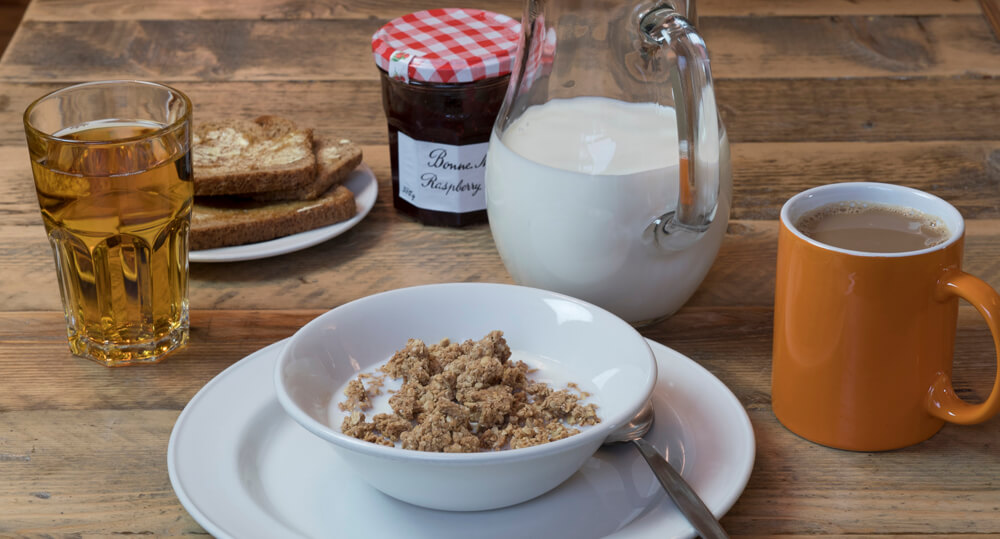
Hostels with breakfast provided : Hostels and Bunkhouses

Hostels and bunkhouses where breakfast is available.

Although historically hostels and bunkhouses are self catering, these days it is relatively easy to find places that provide you with breakfast.  The map above shows the locations of these and a similar map is available showing hostels and bunkhouses where evening meals can be ordered.

Among our network of Independent Hostels, there are many hostels that will happily provide you with a full English / Scottish or Welsh breakfast.  More often than not the eggs, sausages and bacon will have been produced locally.  In fact at New Ing Lodge in Shap, the eggs are laid by the chickens you see scratching in the garden.  There are some bunkhouses too, especially those on long distance paths and cycle routes, that will also do breakfast. Bunkhouses that are used by large groups, in particular, school groups will also often provide a catered option and most will provide vegetarian or vegan options, especially if given advanced notice.

The large city centre hostels often provide free hot drinks and a help yourself continental breakfast as part of their overnight fee.  The smaller more rural hostels do make a charge and these are very often substantial meals designed for walkers out in the wilds all day. You will definitely need to pre-book your meals at these hostels.

The hardened and well organised self-caterers among you may well scorn the idea of someone else preparing your breakfast. But there are many circumstances when sitting down to a hot sizzling, hearty meal, prepared by somebody else, is just what is needed.

For instance when you are traveling long distances to a destination and book in for one night at a hostel to break your journey you really don’t want to be worrying about packing your provisions on that stopover morning. So booking in at a hostel that provides breakfast is the solution.  Or you may be walking or cycling between hostels and don’t want to carry your breakfast with you each day, so once again finding a hostel that provides breakfast is the answer. It is worth remembering that while evening meals are often readily available at local pubs it is far harder to find somewhere close to your hostel that will serve you breakfast.

For those of you who use the hostels as a base for activity holidays; climbing, canoeing, hill walking, mountain biking, etc, you may find days when you want an early start.  It is much quicker and easier to treat yourselves to a breakfast cooked by the hostel owner or staff than stressing and trying to do it yourself.

If there are a lot of people in your group, perhaps coming from different places for a reunion or party, it might be a lot easier to have your first meal of the holiday cooked for you. Then after tucking into a delicious cooked breakfast you can go out and buy the provisions for the rest of the week from the local shops.  So much easier than getting different people to buy different things, or having one person buy it all and have to pack it in the car with the rest of their clothes and equipment.

Some people like to have breakfast prepared for them on the morning of their departure too,  especially if they are leaving very early and perhaps want to pack the car the night before. There is nothing like a hearty meal to set you up for the journey home…and you won’t be wanting much to eat at lunchtime either.

And then just sometimes it is nice to book a cooked breakfast just because you are on holiday and it’s a treat.

So next time you are planning to go away don’t forget that, no matter where you are going in England, Scotland or Wales, it is very easy to find a hostel with breakfast provided.

Food and Meals : Hostels and Bunkhouses

Hostels and Bunkhouses with Evening Meals Available.

Traditionally hostels and bunkhouses are self catering with the kitchen acting as the social hub where guests chat and share stories as they prepare their meals.  These kitchens in the hostels’ communal areas provide the space and opportunity for guests to socialize within the accommodation, indeed it is this that gives the hostels their charm.

Self catering for evening meals at bunkhouse

However, it is a treat to have a delicious home cooked meal put in front of you and many hostels offer this service. The map shows all the hostels and bunkhouses that provide evening meals. Look here for a similar map of hostels and bunkhouses providing breakfasts.

Why have an evening meal?

Not all hostels are located close to pubs or restaurants so the fact they offer evening meals is a real perk. It saves you walking or cycling to the nearest town or village or having to take the car.  If you drive, of course, the driver can’t enjoy a glass of the local beer.

Hostel Bar at New Ing Lodge
On those occasions when you are on a long journey and are stopping overnight at a hostel before continuing to your destination the next day. Arriving to a homecooked meal is a great feeling. It really takes the hassle out of any long-distance walk or cycle. Not to mention making your backpack lighter!

It is vital, of course, that you book your evening meal with the hostel owner or manager in advance. Hostels provide great value meals and you may be surprised at how good the evening meals provided are. Of course, it isn’t just on those stop overnights that having your evening meal cooked for you is a real bonus. Imagine you have been out all day. Perhaps you have been hill walking, mountain biking, surfing, or wildlife watching. Whatever your activity, after a long strenuous day in the outdoors, there isn’t anything nicer than being able to arrive back at your cozy, warm hostel with nothing more to do than shower, relax, and wait for the call that your evening meal is ready to be served. What a luxury!!

evening meals at hostels New Ing Lodge

Another time when a catered evening meal is a godsend is on your first evening. Imagine, you have arrived at the hostel rather late, and you and your party are tired after a long journey. What could be better than having a hot tasty meal prepared for you by the hostel team?

Great for groups

A catered evening meal is even more important if there is a large group of you. Organizing food for any large group can be a logistical nightmare. There’s the hassle of buying the right quantities of the ingredients, lugging them to the hostel, and unpacking them all. Then someone has to take charge of the cooking process. And of course, after preparing and serving the meal, the washing up needs to be done!! Wouldn’t it be better to add evening meals to your booking?

Of course, you don’t have to have an evening meal cooked for you every night. A great attraction of hostels is the flexibility they offer their guests. Meals are no exception. You are free to mix cooking your own evening meals, with going to find local pubs or restaurants and with booking to eat evening meals prepared by the hostel.

Hostel Meals catered for you
So next time you’re planning your holiday, remember that there are many hostels in our network that offer evening meals. There may well be one just where you are wanting to stay.


Isaacs Tea Trail : Accommodation in hostels and bunkhouses

Accommodation near Isaac’s Tea Trail

The 36 mile  trail is a showcase of the North Pennine’s rich heritage both natural and man-made.

High among the memorable features are the Bastles or defensive farmsteads from the troubled times of the Border Reivers (see Rowantree Bastle) to more peaceful times with the Bavarian-styled church and spire at Kirkhaugh. Another surprise amongst many is the model village within what was a model village at Nenthead built for the lead miners. At Ninebanks is a rare hearse house refurbished as a heritage stop for visitors wanting to learn more about the trail and its inspiration Isaac Holden. From the past to the present and future, there’s even a sci-fi Museum in Allendale.

Over 36 miles there’s something for everyone and nowhere else like it. This is an undiscovered and quiet corner of Northern England, with the chance to discover an almost timeless upland landscape of upland fells and green dales. The open space and peace and quiet of the countryside are a tonic if you are wanting to find somewhere for a short break to get away from it all.

The Route

The trail is divided into 4 sections with an independent hostel, bunkhouse, or camping barn at the end of each. Allow between 2-4 days depending on how relaxed you want to be.


isaacs tea trail in the north pennines

  • Allendale  (Allendale Bunkhouse NOW CLOSED) to  Carrshield Camping Barn (near Carshield) or Haggs Bank Bunkhouse (Nentsbury). Follows the East Allen valley upstream and gently climbs the Black Way to the high heather moors.
Carrshield Camping Barn on Isaacs Tea Trail North Pennines
Carrshield Camping Barn
Haggs Bank Bunkhouse on Isaccs tea trail
Haggs Bank Bunkhouse
  •   Carrshield Camping Barn, Haggs Bank Bunkhouse to Alston Youth Hostel in Alston, or Garrigill Village Hall in Garrigill. Alternates between the fell side and waterfalls.
Accommodation at Alston on Isaacs Tea Trail
Alston Youth Hostel
  • Alston Youth Hostel or Garrigill Village Hall to Ninebanks Youth Hostel and Chalet. Follows the Pennine Way before crossing the River South Tyne. Then climbing the valley of the Ayle Burn into the West Allen
Ninebanks Youth Hostel on isaacs way
The Youth Hostel at Ninebanks. There is a high-quality self-contained Chalet available.
  • Ninebanks Youth Hostel and Chalet to Allendale. Crosses the watershed from the West Allen to the East Allen through a mixture of rough pasture, meadows, and woodlands with a riverside walk into Allendale.
Allandale Bunkhouse on Isaacs Tea Trail

Details of the route can be found on the LDWA website and on Isaac’s Tea Trail official website.

Scottish Islands : Bothies, Hostels and Bunkhouses

The Famous Scottish Islands

Scotland has no shortage of islands, with 94 currently inhabited. The island chains that make up the Hebrides, Orkney, and Shetland are some of the most beautiful and wild places in the country. Every island has its own unique traits and quirks that make them special, you can on one or try island hopping to get a feel for as many as possible. The Scottish Islands are well worth a visit.

Orkney

The Orkney islands are made up of 70 islands, 20 of which are inhabited. The largest is known as the Mainland. 10 miles north of Caithness, getting to Orkney feels like a real adventure. The islands are a haven for sea birds, on North Ronaldsay, you can stay at Observatory Hostel which sees a huge variety of birdlife. Especially in spring and autumn when the migratory birds pass through on their way to pastures new.

Birds aren’t the only animals that make their home here or pass through. It is estimated that 15% of the world’s grey seal population lives on Orkney. Recently an ever-increasing number of Orca A.K.A Killer Whales have been spotted off the coast of Orkney.

4 Orca with fins poking out of the dark water
Orca have recently been spotted off the coast of Orkney

Shetland

The Shetland Isles are the furthest north of the Scottish islands. They lie about 50 miles northeast of Orkney and 110 miles from mainland Scotland. They’re only 140 miles from Norway. A visit to Shetland is a visit to the most remote corner of the UK and it can be a really magical experience. The islands are stunning, with sandy beaches, rugged cliffs, and grassy moorland combine to make the islands a great place for walking and adventure.

sandy beach next to blue water with green fields and cows grazing behind
Shetlands has a variety of landscapes that blend into one

The Hebrides

The Hebrides is an Archipelago off the west coast of Scotland. Consisting of the inner and outer Hebrides, adventure awaits those who take a trip to the islands. Walkers are often taken by the majesty of the Hebridean Way, a route that takes you from the south to the north of the outer Hebrides. The islands have a unique, friendly culture that feels different from the mainland, it’s something you have to experience for yourself.

Building in front of blue water green land around the cove
The Hebrides are a remarkable place